
Essay
When the Classroom Turned Inward
Rain in Singapore brought back an old classroom window—and a question about how modern classrooms shape our attention.
It rained heavily in Singapore today.
I hurried around closing the windows before the rain came in, and for some reason it took me straight back to my school days in India.
Our classrooms had several windows. Most of the time, they were open.
When it rained hard, someone had to quickly shut them. I hated sitting next to a window. Even after you closed it, water sometimes found its way through. A few drops on the desk. Sometimes on your books.
I had not thought about that in years.
Then another classroom came to mind.
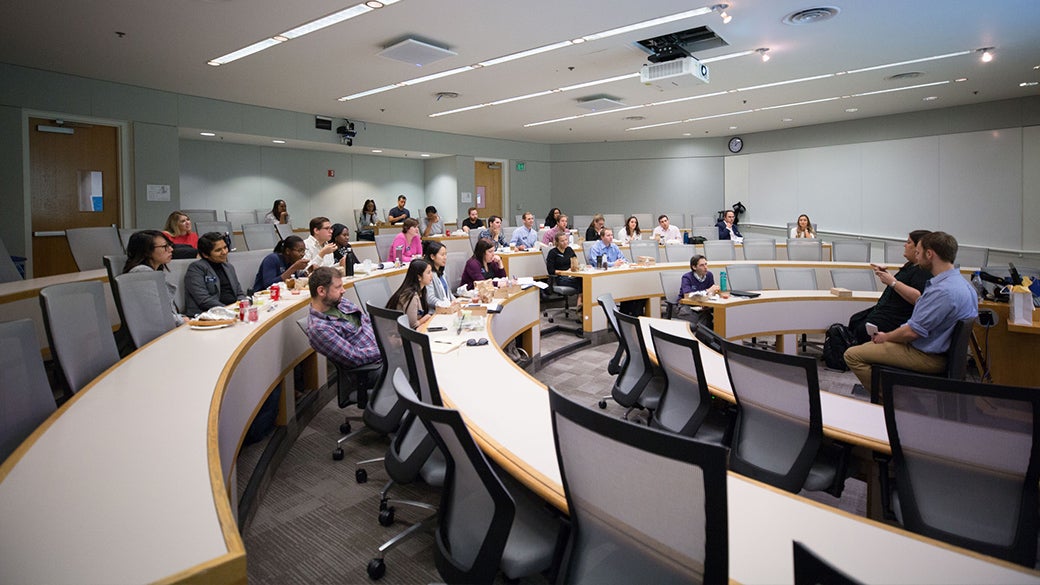
UCLA Anderson.
I spent countless hours in classrooms there over the last two years.
And I suddenly realised something.
I could not remember ever closing a window.
In fact, in many of those classrooms, I could not remember a window at all.
That thought stayed with me.
I had seen something similar at Chicago Booth. More recently, I came across a photograph of a classroom at London Business School.
Tiered seating. Controlled lighting. Screens. Everyone facing inward.
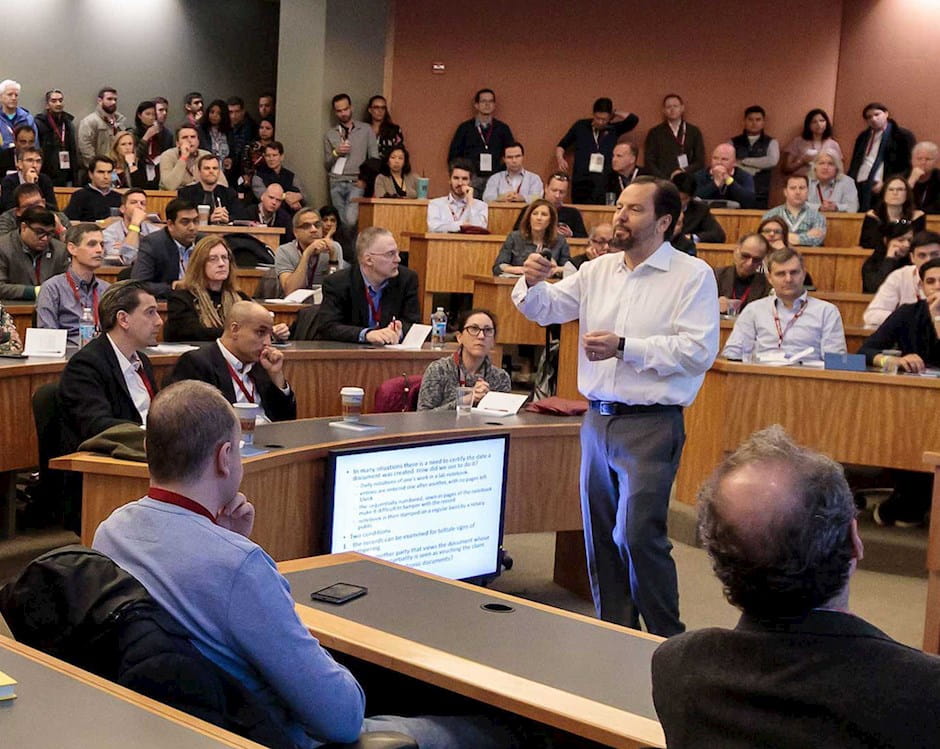
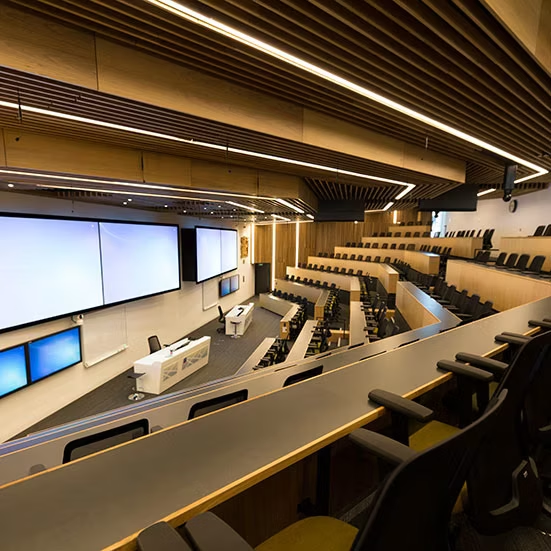
Classrooms at UCLA Anderson, Chicago Booth and London Business School. Images: UCLA Anderson, Chicago Booth and London Business School.
At first I wondered whether this was simply about removing distraction.
It turns out the story is more interesting.
My school classrooms in India were not built around some romantic idea of being close to nature.
The windows were practical.
They brought in light and air. In a warm climate, before air-conditioning was common in classrooms, you needed them.
They also brought in heat, noise and rain. The world outside was always somewhere in the room.
Modern classrooms can be designed very differently.
Air, light, temperature and acoustics can all be controlled.
But business-school classrooms went further. The room itself was redesigned around how people learn from one another.
While looking into this, I came across the history of the case-method classroom at Harvard Business School.
Traditional lecture rooms placed the professor in front and students in rows.
The case-method classroom changed that.
Curved, tiered seating allowed students to see one another. When someone spoke, the rest of the room could turn toward them. The professor was still important, but was no longer the only person worth looking at.
That made me see my UCLA classrooms differently.
Someone on the other side of the room would make a point.
You would turn.
Someone else would disagree.
Another person would build on it.
The conversation moved around the room.
You were not there only to learn from the professor.
You were there to learn from the fifty or sixty other people in the room too.
Perhaps that is why these classrooms feel so different.
They turn our attention inward.
The outside world becomes less visible, while the people inside become more visible.
And perhaps that is where the story should end.
Except for one thing.
The physical window became less important, while the people in the room became more central to the design.
And then we placed a much bigger window on every desk.
A screen that can open almost the entire world.
At first, that felt like an irony.
But perhaps the real question is not which window is open.
The old classroom window could pull my attention outside.
The digital one can do the same.
One opened to the world beyond the wall.
The other opens to almost the whole world.
But in both cases, I still have to notice where my attention has gone.
Maybe that is what this comes back to.
Self-awareness.
The room can be designed to help us focus.
The seats can turn us toward one another.
The windows can be open or closed.
But unless we notice where our attention is going, none of that can do the work for us.