
Essay
Beyond Networking
What 20+ Teams and 100+ People Taught Me
The most meaningful relationships rarely began with an introduction. They were built while solving problems and doing meaningful work together.
A few weeks before graduation, I became curious.
How many different teams had I worked with during my UCLA Anderson journey?
I started counting.
Study groups.
Electives.
Competitions.
Consulting projects.
The podcast.
Cross-program collaborations.
Global immersion projects.
The final number surprised me.
By graduation, I had worked across more than 20+ teams and collaborated with over 100+ classmates, alumni, and community members.
If you had told me that on the first day of Leadership Foundations Week, I probably wouldn’t have believed you.
Not because the number is large.
Because at the time, I still considered myself someone most comfortable in familiar circles.
Looking back now, the number isn’t what matters.
What matters is what those teams taught me about leadership, collaboration, and people.
The First Lesson Started Outside the Classroom
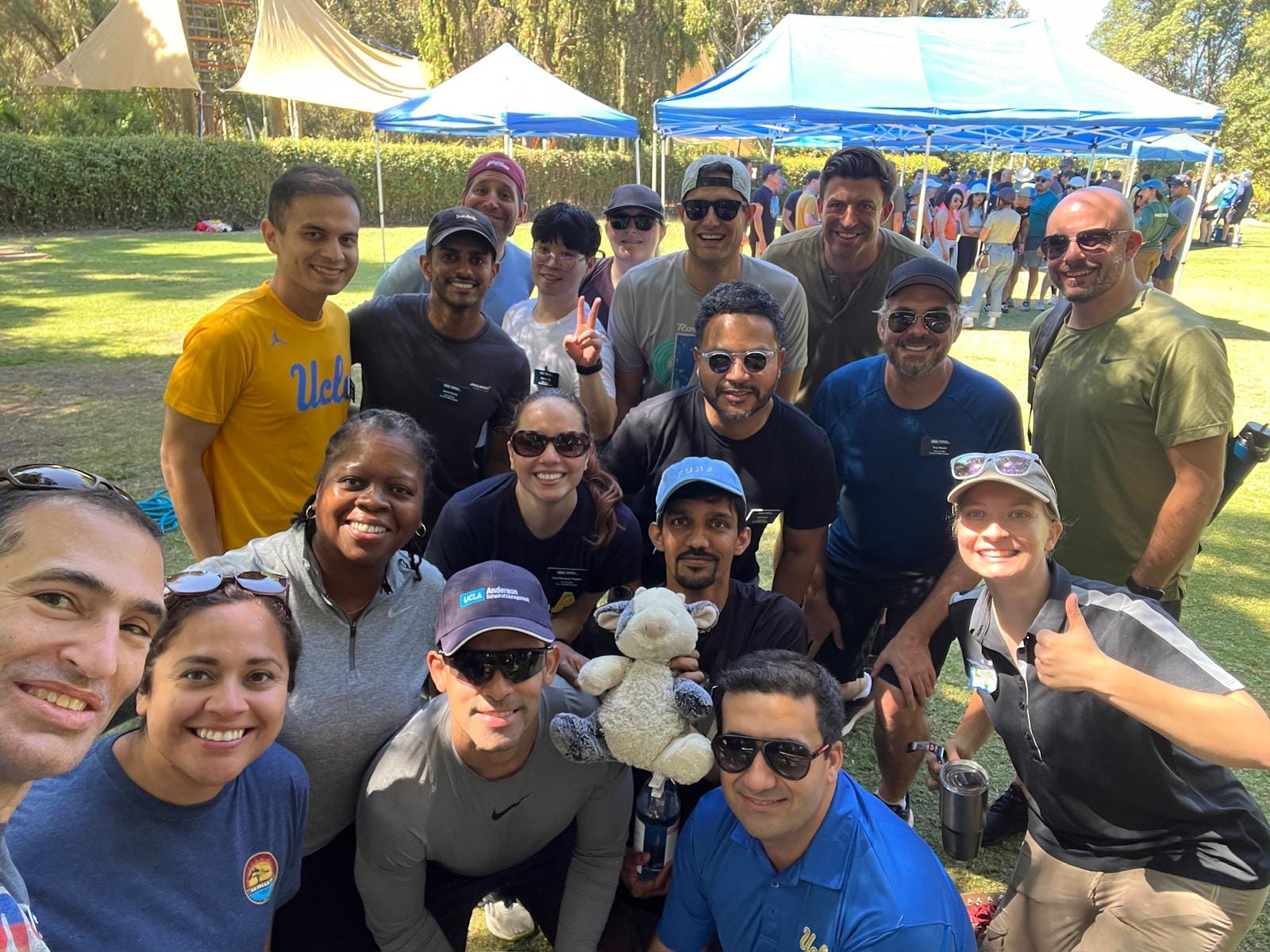
One of the earliest experiences in the program was the ropes course during Leadership Foundations Week, We spent a day working through a series of team challenges.
Balancing a stick, Navigating ropes that became wider and more difficult as we moved forward.
Trust exercises that required partners to depend on one another.
And the challenge I remember most: climbing a tall pole and leaping forward to touch a hanging target that always seemed just a little farther away than expected.
I had participated in similar programs before.
Yet this one felt different.
Perhaps because I wasn’t just learning about teamwork.
I was learning something about myself.
I still remember some of my early interactions with classmates like Berj. Looking back, I was probably more focused on solving the problem than understanding the people around me. Like many leadership lessons, the learning came from realizing what I could have done differently.
The ropes course lasted only a day.
But in hindsight, it introduced a theme that would repeat throughout the next two years.
Every team would teach me something new.
Not just about business.
About people.
The Habit of Saying Yes
At first, I mostly stayed within the structure of the program.
Assigned study groups. Assigned projects. Assigned teams.
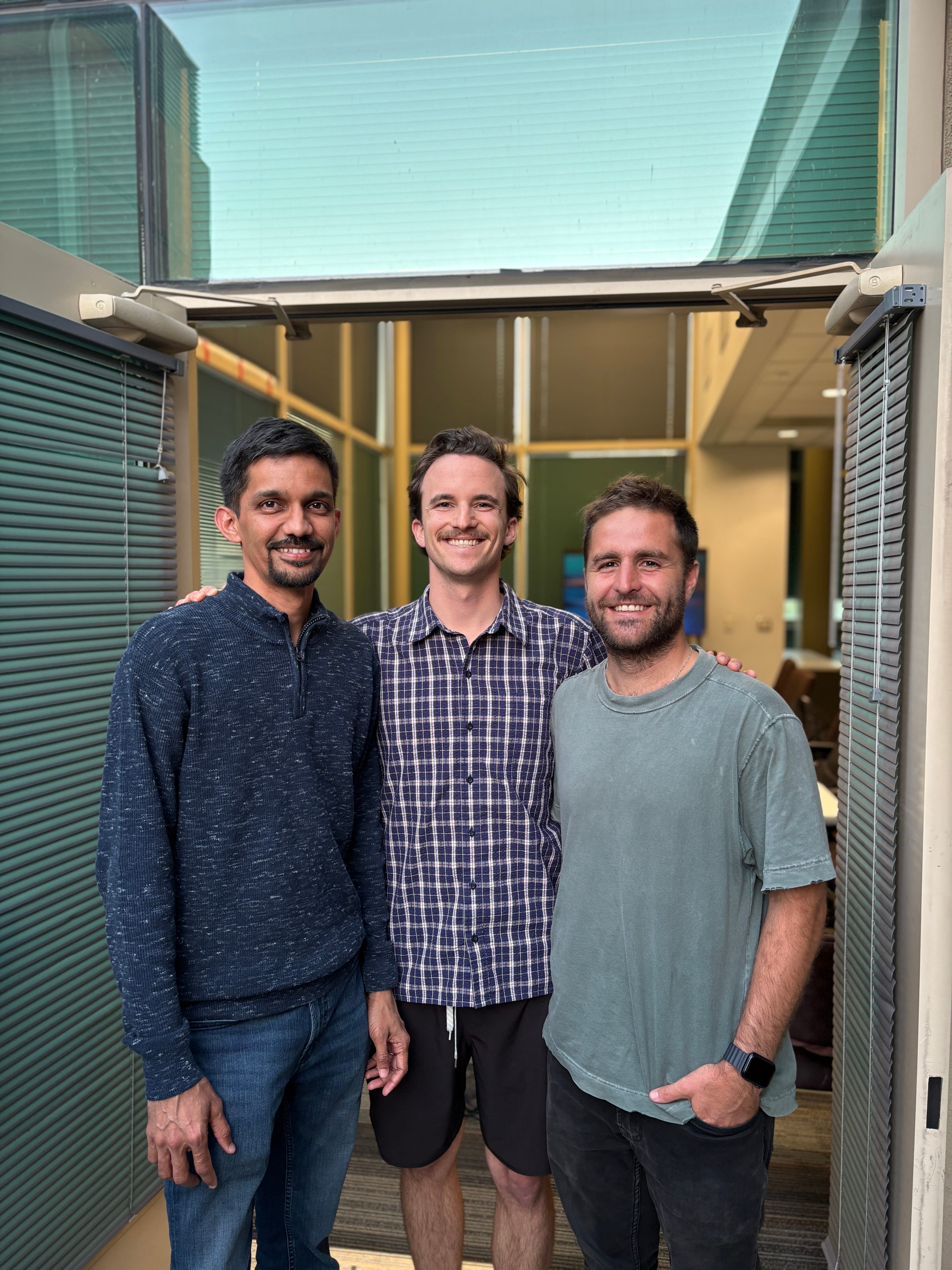
Then something changed. I joined an elective with people I had never worked with before. As someone who naturally leans toward being an introvert, this surprised me.
One of the turning points came during the AI Operations elective.
The class itself was fascinating and helped me better understand a field that is reshaping every industry. But what stayed with me most was the experience of working with a completely new team.
It would have been easy to stay within familiar circles.
Instead, new experience made it easier to say yes to the next one.
Then another project.
Then a competition.
Then a consulting engagement.
Then the podcast.
Then a cross-program collaboration.
What started as curiosity slowly became a habit.
And every new team exposed me to people who approached the world differently than I did.
Watching how different people approached the same challenge reminded me that the most valuable learning often comes from the people around you, not just the material being taught.
That realization stayed with me for the rest of the program.
Learning Through Different Lenses
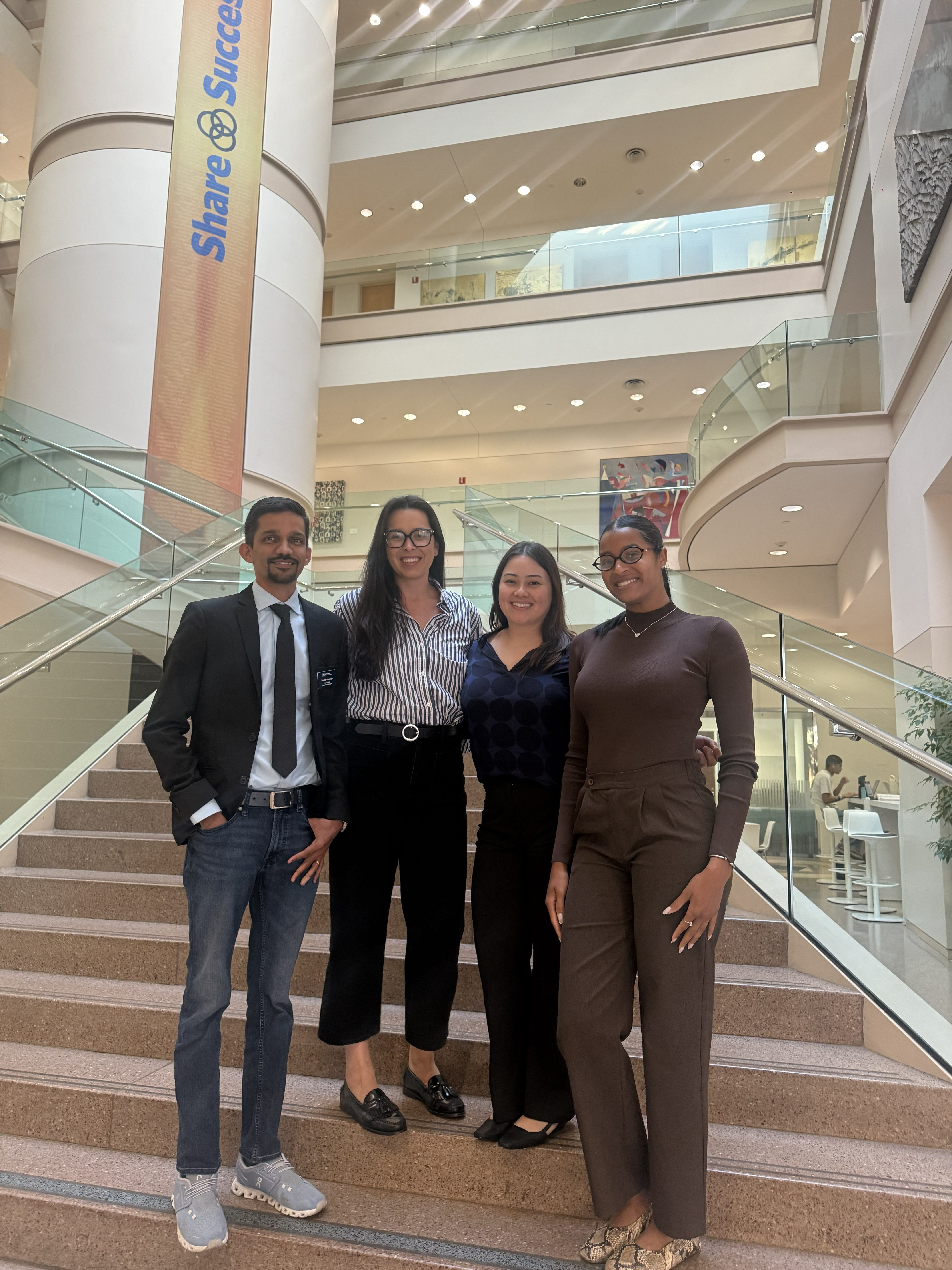
As the program progressed, I found myself working with classmates from different industries, countries, functions, and professional backgrounds.
Some came from finance. Some from healthcare. Some from technology. Some from entrepreneurship. Others from government, consulting, nonprofits, and industries I knew very little about before UCLA.
One project might involve someone with deep financial expertise.
Another might include someone building or acquiring businesses in real time while we were learning the concepts in class.
In one study group, I experienced team dynamics that were very different from those I had known previously. The way people checked in on one another, celebrated milestones, and ensured everyone was included gave me a different perspective on teamwork and leadership.
Working with students from UCLA’s Full-Time MBA, FEMBA, Public Policy, Urban Planning, and other programs expanded that perspective even further.
The engineer sees a problem one way. The entrepreneur sees it another.
The policymaker sees something entirely different. None are necessarily right or wrong. They simply bring different lenses.
And leadership often begins with understanding those lenses.
Competitions Were Never About Winning
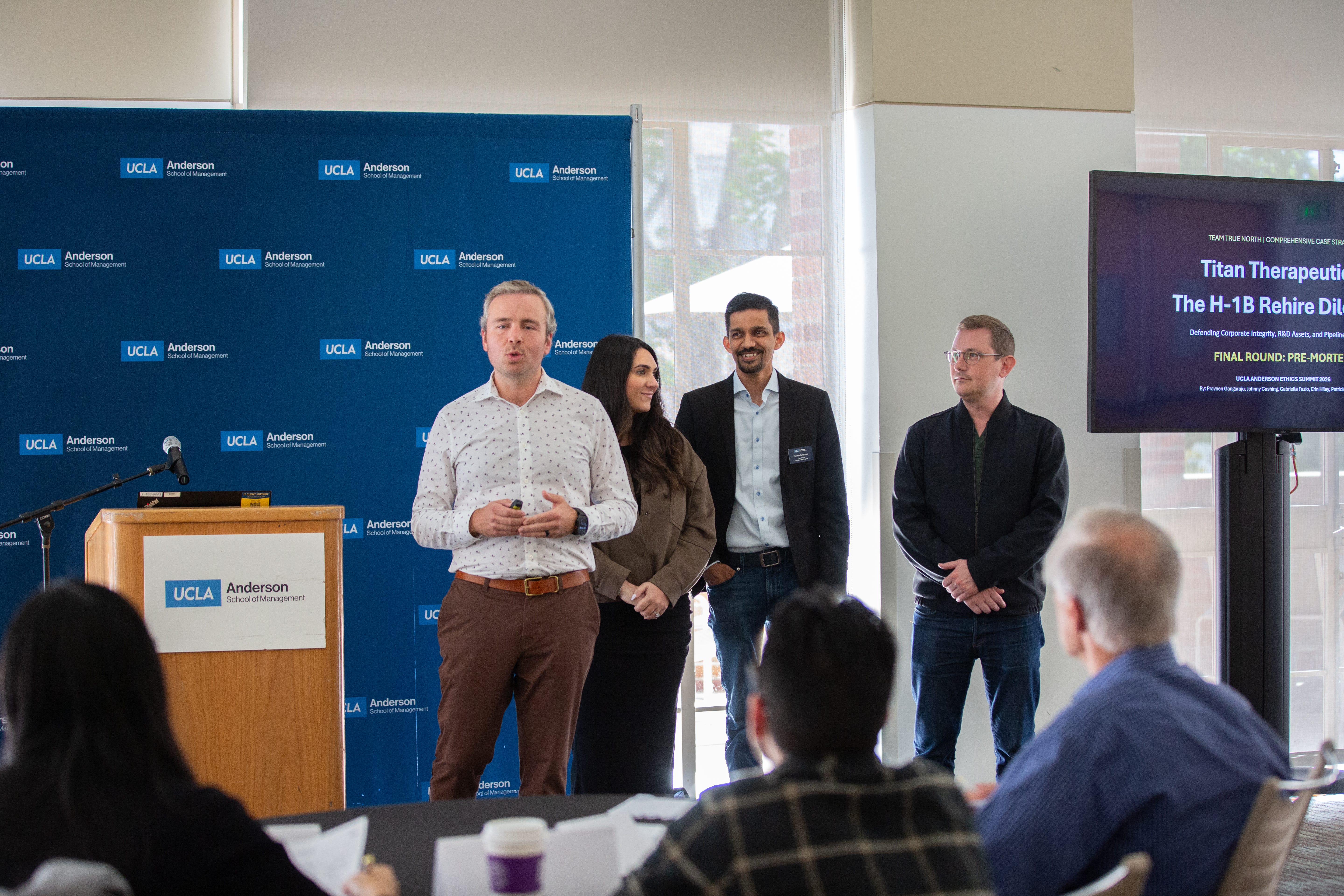
Somewhere along the way, I started participating in competitions.
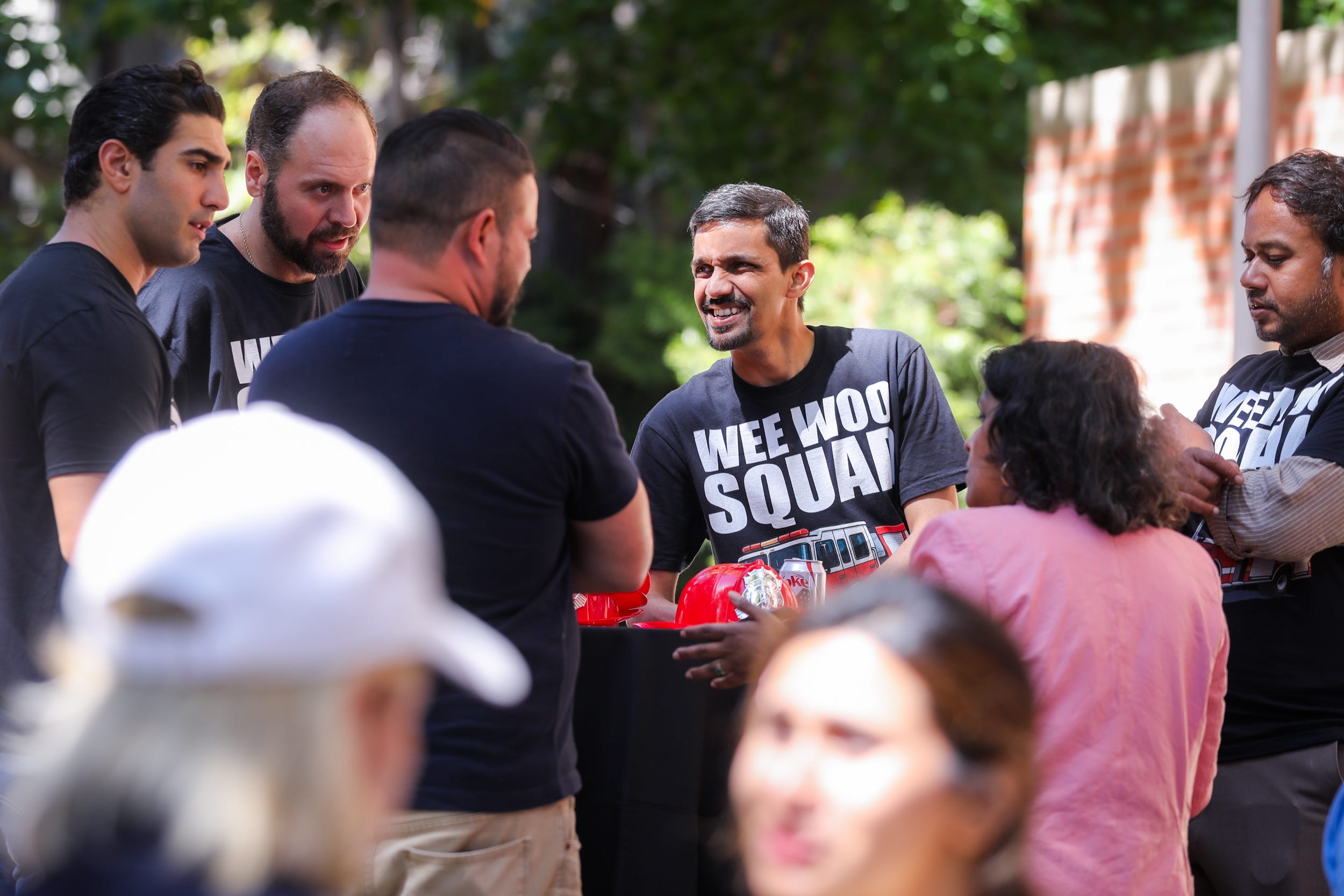
The Ethics Challenge. The LMI Sand Prize. The HPE competition.
Looking back, I am grateful for the experiences and the recognition our teams received.
But the awards were never what made those experiences memorable.
What I remember are the discussions. The debates. The preparation.
The uncertainty.
The moments when a team had to decide which path to take despite incomplete information. Those experiences reinforced something I have observed throughout my career.
Pressure reveals character.
You learn who listens.
Who challenges assumptions respectfully.
Who builds consensus.
Who steps forward when leadership is needed.
Who quietly supports the team behind the scenes.
The trophies are nice.
The people are what stay with you.
Learning Beyond the Classroom
Not all learning happened in class projects or competitions.
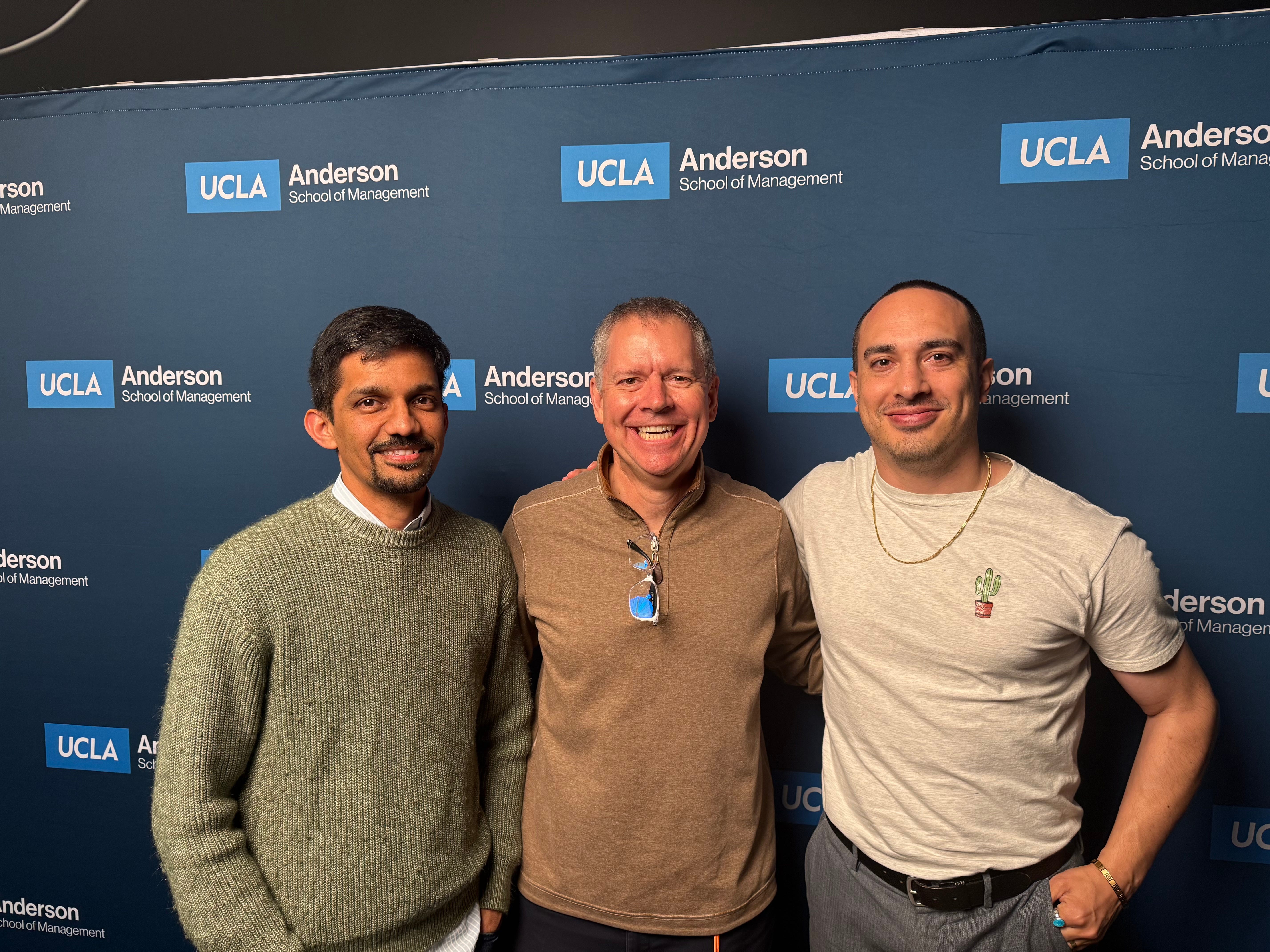
One of the more unexpected experiences was helping build and support the UCLA EMBA podcast.
Working with Dylan, Salo, our hosts, guests, and the broader marketing team exposed me to a completely different form of collaboration.
Most teams are focused on solving problems. The podcast was focused on telling stories.
That required different skills.
Listening.
Curiosity.
Preparation.
Creating space for others to share their experiences.
It reminded me that collaboration is not always about execution.
Sometimes it is about helping others be heard.
Each experience added another layer to the learning.
What I Learned About Leadership
When people talk about the value of an MBA, they often talk about the network.
I’ve never been completely comfortable with that word.
Network can sound transactional.
As if the objective is to accumulate contacts.
That wasn’t my experience.
The relationships I value most were not built at networking events.
They were built while working through challenges together.
While preparing presentations.
While debating ideas.
While solving problems.
While occasionally disagreeing.
And while learning from one another.
Looking back, UCLA Anderson became a laboratory for understanding how different people think.
Every team taught me something.
Not just about business.
About perspective.
About leadership.
About myself.
A Final Reflection
When I started the program, I expected to learn from professors.
I did.
I expected to learn from coursework.
I did that too.
What I didn’t expect was how much I would learn simply by working with so many different people.
More than 20 teams.
More than 100 classmates, alumni, and collaborators.
Dozens of projects, conversations, presentations, competitions, and shared experiences.
Looking back, those numbers are not a measure of my network.
They are a reminder of how many opportunities I had to see the world through someone else’s eyes.
The projects will eventually become memories.
The presentations will be forgotten.
The competitions will come and go.
But the people, lessons, and perspectives I gained from working alongside them will stay with me for a very long time.
And that may be one of the most valuable lessons I take away from UCLA Anderson.