Essay
When AI Makes Everything Faster, What Still Makes It Matter?
AI can accelerate execution, but speed cannot replace human judgement, emotional timing or authentic connection.
AI is being celebrated for making advertising faster and cheaper.
But speed was never the hard part.
The harder question is whether we’re using AI to strengthen authentic human connection or quietly replacing it.
Because people don’t connect with how efficiently something was produced. They connect with what feels real.
I recently listened to a podcast on AI in advertising, using Coca-Cola as an example.
The case was compelling. AI can reduce production time, lower costs, and allow brands to test and scale creative faster than ever before.
All of that is true.
But advertising has never been a production problem. It has always been a connection problem .
The speed story
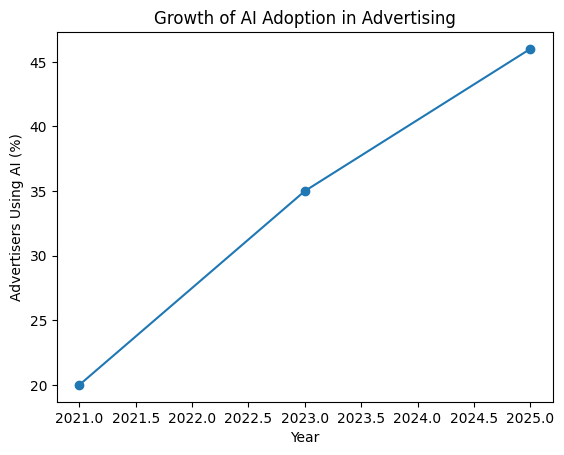
AI adoption in advertising is accelerating quickly.
Nearly half of advertisers plan to use AI for media strategy in the near term, and most marketers already using AI cite speed as the primary benefit, faster creation, faster iteration, faster decisions.
Speed is no longer rare. It’s becoming expected.
The performance story
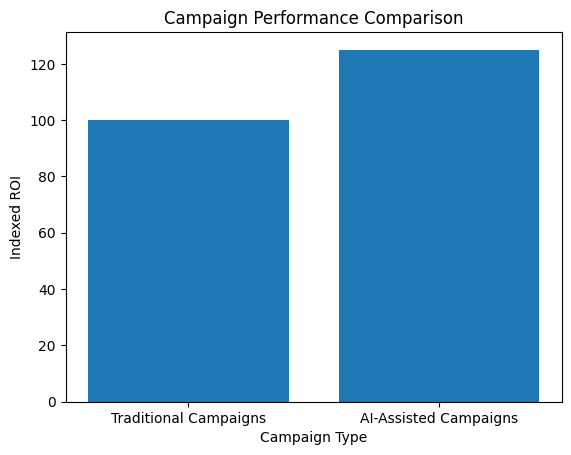
There’s also evidence that AI-assisted campaigns can improve short-term performance. Better targeting, faster testing, and automated optimization can drive measurable gains.
Graph caption: Performance gains don’t automatically translate to connection.
AI improves efficiency inside the system . It does not decide what should matter to people.
The connection story
This is where the picture becomes more nuanced.
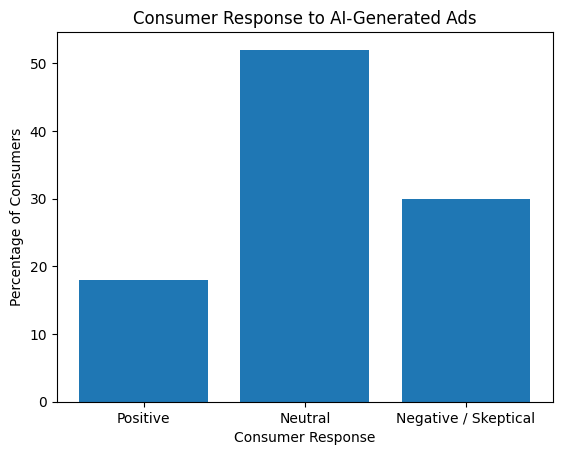
Consumer research suggests that most people feel neutral about AI-generated ads. Only a small percentage say it improves how they feel about a brand. Many describe these ads as forgettable or emotionally flat.
Indifference rarely shows up immediately in metrics. But over time, it quietly erodes trust and brand equity.
What this really means
Coca-Cola didn’t become iconic because its ads were produced efficiently. It became iconic because its messages consistently reflected human moments , joy, nostalgia, togetherness, belonging.
AI can help execute those ideas faster and cheaper. It cannot originate why they matter.
In fact, AI is doing something else very effectively.
It is exposing weak thinking faster .
Shallow ideas now get produced at scale. Authentic ideas get amplified, if they exist in the first place.
My take
As AI enters every field, speed and efficiency will increasingly look the same everywhere.
What won’t is judgment .
AI excels at execution, generating options, testing variations, optimizing outcomes. But it doesn’t sense cultural undercurrents, emotional timing, or when less is more.
That still requires people who stay close to real conversations, real behaviors, and real moments.
The advantage won’t come from choosing between humans or AI. It will come from knowing what must stay human , and using AI to support it, not substitute it.
AI is like a camera with perfect resolution. It still needs someone who knows what’s worth capturing.
AI will continue to reshape how work gets done.
The harder leadership task is deciding what should not be automated , even when it could be.
Because brands aren’t remembered for how efficiently something was produced, they’re remembered for how they made people feel.
Where are you drawing that line in your organization?
Figures shown are directional, based on aggregated industry research (eMarketer, NielsenIQ, Zappi, SurveyMonkey).
Grateful for the strategy discussions in class that helped shape this perspective - Professor Jana Gallus